Key Takeaways
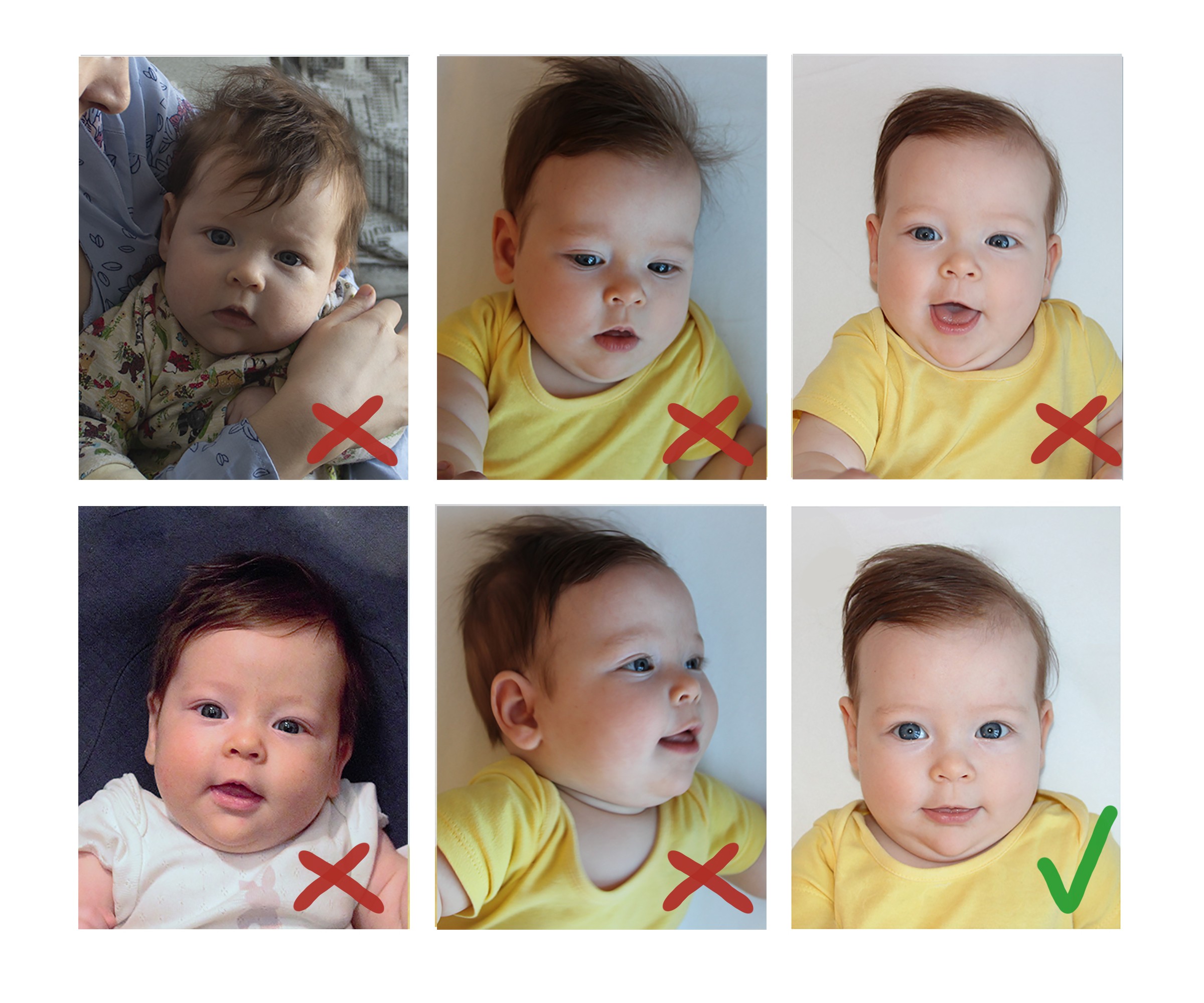
Laying your baby on a plain white sheet or covering a car seat with a smooth sheet provides optimal support while ensuring an even background.
Position your baby perpendicular to a large window to eliminate harsh shadows behind the head without using a disruptive camera flash.
While passport agencies require eyes to be open and faces centered, minor natural expressions are widely accepted for young infants.
Taking an official newborn passport photo can feel far more intimidating than standard studio portraiture. Government agencies enforce uncompromising biometric algorithms regarding head ratios, eye direction, lighting balance, and background uniformity. However, newborns under three months cannot support their own heads, follow verbal instructions, or remain stationary on command.
Whether preparing for an upcoming international family trip, registering dual citizenship, or updating travel documentation, securing an approved photo on your first attempt requires familiarizing official newborn passport photo requirements and employing practical positioning techniques at home or in a studio.
Official Government Requirements at a Glance
Biometric passport processing software used by agencies such as the US Department of State, UK Passport Office, European Union member states, and UAE Federal Authority for Identity and Citizenship (ICA) uses strict facial recognition markers. The software measures inter-pupillary distance, jaw alignment, and head-to-canvas ratios.
While most governments extend limited leniency toward infants regarding slightly open mouths or minor head tilts, core composition parameters remain strictly enforced.
Parameter | Official Requirement | Frequent Cause for Rejection |
Background | Pure white or off-white, pattern-free | Cast shadows, visible bed sheet folds |
Facial Orientation | Full face centered, facing camera directly | Head turned sideways or chin slumped forward |
Support Structure | Zero visible supporting objects or adults | Parent hands, fingers, or shoulders in frame |
Head Accessories | None permitted (unless religious exemption) | Pacifiers, headbands, bows, bibs, hats |
Image Quality | Sharp focus, high contrast, zero glare | Blurry motion, harsh camera flash reflections |
Core Biometric Rules to Follow
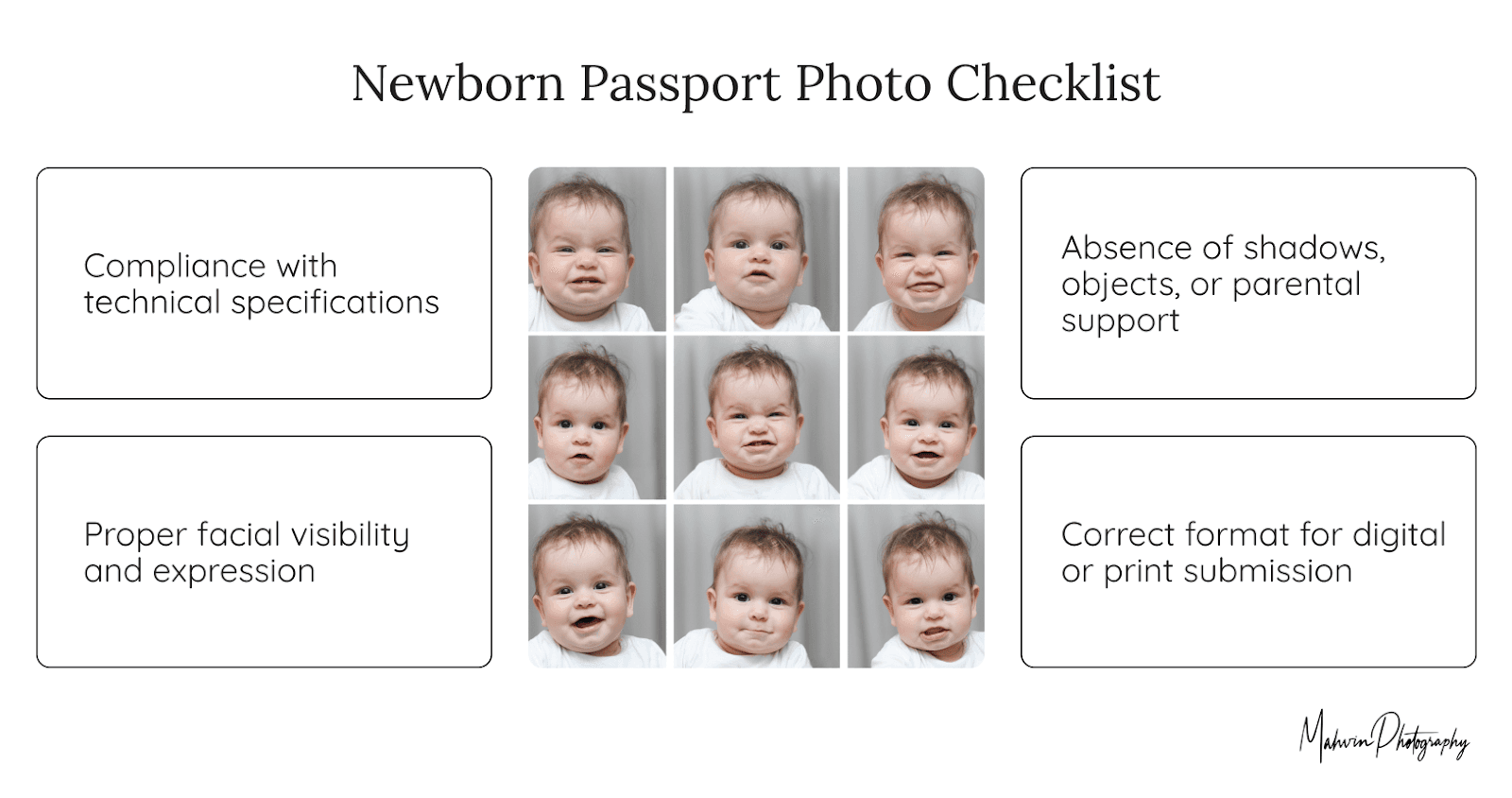
Full Facial Exposure: The face must be fully visible from the top of the forehead to the bottom of the chin, and ear-to-ear. Hair must not obscure eyes.
No External Objects: Pacifiers, teething rings, pacifier clips, headbands, bows, hats, bibs, and parent fingers supporting the head will cause immediate rejection.
Zero Shadow Tolerance: Background shadows cast by the ears, chin, or shoulders frequently trigger automated scan failures.
Step-by-Step DIY Home Setups for Newborns
Attempting to hold a newborn upright in front of a wall almost always leads to parent hands slipping into the frame or the baby's head slumping forward. Use one of these two proven setup methods instead.
Method 1: The Lay-Flat Sheet Technique (Recommended for 0–3 Months)
This method utilizes gravity to maintain a neutral, front-facing position without forcing your baby upright.
Prepare the Backdrop: Iron a plain, matte white bedsheet or poster board to remove all wrinkles. Lay it flat over a mattress, changing pad, or clean carpeted floor near a large window.
Position the Infant: Lay your baby on their back on top of the sheet. Ensure their shoulders are level and their head points straight toward the ceiling.
Align the Camera: Stand directly above your baby. Hold your smartphone or camera completely parallel to their chest plane. Shooting from an angle distorts facial proportions and will invalidate the image.
Maintain Distance: Stand back and use optical zoom (2x) rather than standing too close, which introduces lens distortion around the nose and forehead.

Method 2: The Car Seat Cover Method (Ideal for Babies with Reflux)
If your baby struggles laying completely flat or suffers from acid reflux, an infant car seat provides comfortable head elevation.
Drape the Car Seat: Cover the car seat entirely with a smooth, heavy white sheet or blanket. Tightly secure the fabric behind the seat with clips or tape so no folds, buckles, or harness straps are visible.
Place the Baby: Lay your baby in the seat over the covered harness. Ensure their back is straight and head supported.
Capture at Eye Level: Crouch down so the camera lens is directly level with your baby's eyes, keeping the background completely white and uniform.
Master Lighting, Exposure, and Camera Settings
Lighting flaws account for over 40% of rejected newborn passport submissions. Built-in camera flashes cast harsh, concentrated shadows behind small ears and under the chin, while creating unnatural skin reflections.
Window Placement: Position your baby at a 90-degree angle to a large natural light source. Avoid direct backlighting or placing the baby in direct, harsh glare.
Shadow Diffusion: Place a white foam board or poster board opposite the window to bounce soft fill light back onto the shaded side of your baby's face.
Flash Settings: Turn off built-in camera and phone flashes completely to prevent stark background shadows and uncomfortable eye glare.
Camera Speed: Use continuous burst mode with a high shutter speed (1/250s or faster) to capture clear frames during sudden twitches or head turns.
When preparing your home studio setup, prioritizing comfort and safety is critical. Reviewing proper infant safety guidelines ensures your baby remains secure throughout any photo session.
Timing, Expression, and Behaviour Control
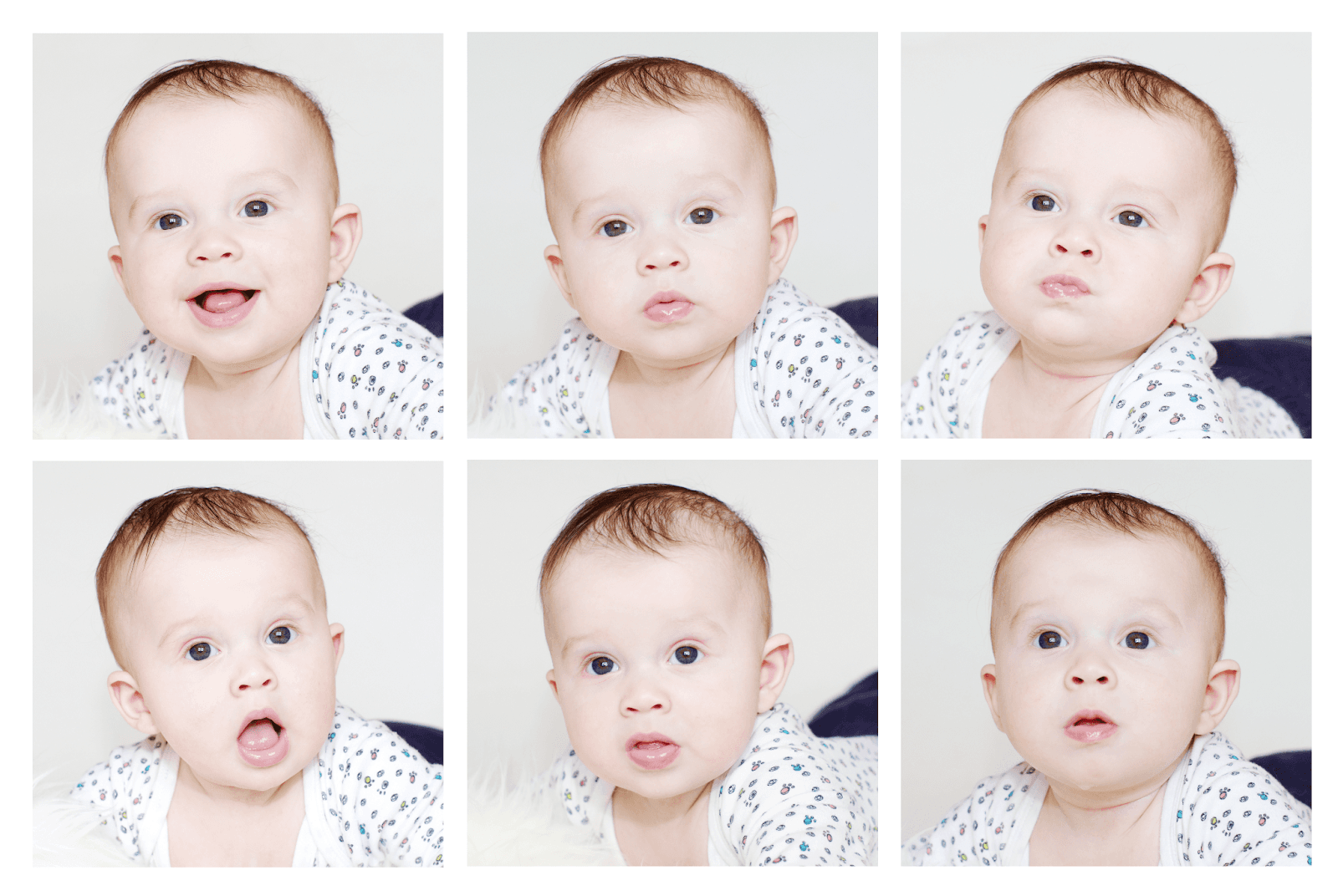
Infants operate on their own timelines. Trying to force a session during naptime or right before a feeding usually results in tears, closed eyes, or excessive wriggling.
Choosing the Optimal Window
Schedule your shoot roughly 15 to 30 minutes after a feed. The baby should be full, dry, alert, and calm. If your baby is prone to spit-ups, allow them to burp upright for a few minutes before laying them flat on your white setup.
Working as a Two-Person Team
Attempting a solo passport shoot with a newborn is notoriously difficult. Work with a partner:
Person A (Photographer): Focuses solely on framing, focus, elevation, and triggering the shutter.
Person B (Assistant): Stands directly behind the photographer's head (at lens level) using gentle acoustic cues, like soft rattles, clicking sounds, or high-contrast flashcards, to draw the baby's gaze straight into the camera lens.
Outfits, Accessories, and Grooming Standards
Selecting the right clothing prevents contrast issues during government cropping processes.
Contrast is Crucial
Dress your baby in dark or rich solid colors (navy, burgundy, deep green, charcoal). Avoid white, cream, or light pastel onesies, which blend into the backdrop and cause "floating head" errors during software checks.
Avoid High Collars and Hoods
Bulky hoodies, thick winter collars, or ruffled neckline bibs push up against the jawline, obscuring the neck and altering natural head proportions.
Remove All Accessories
Headbands, decorative hair bows, pacifiers, pacifier clips, bibs, and hats must be removed prior to taking the photo.
International Dimension Specifications
Dimensions vary significantly by country. Printing the wrong dimensions will result in an immediate application rejection.
Jurisdiction | Print Dimensions (W x H) | Head Size Requirement | Background Color |
United States | 2 x 2 inches (51 x 51 mm) | 1 to 1.375 in (25–35 mm) | Plain White or Off-White |
United Kingdom | 35 x 45 mm | 29 to 34 mm (chin to crown) | Cream or Light Gray |
Schengen Area / EU | 35 x 45 mm | 32 to 36 mm | Light Gray or Plain White |
Canada | 50 x 70 mm | 31 to 36 mm | Plain White |
UAE (ICA / EIDA) | 35 x 45 mm | Centered, 70–80% of canvas | Plain White |
DIY Home Session vs. Professional Studio
Deciding whether to take your newborn's passport photo at home or book a professional session comes down to convenience, timing flexibility, and technical access.
DIY Home Photoshoots offer maximum schedule flexibility since you can shoot at any time without waking a sleeping baby. You get unlimited attempts with zero time pressure, though you must manually manage window lighting, background smoothness, biometric dimension cropping, and proper paper printing.
Professional Studio Sessions eliminate all technical guesswork. Studio softboxes remove background shadows instantly, and professional cropping tools ensure exact government specs. However, fixed appointment times can disrupt feed routines or nap times.
If you prefer to leave technical setup to an expert or want to pair travel prep with high-end milestone portraits booking a dedicated session for newborn photography in Dubai ensures compliance alongside beautiful artistic family heirlooms. Knowing what to look for in a newborn photographer helps you choose a specialist equipped to handle infant safety and biometric requirements seamlessly.
Securing Your Newborn's Passport Photo
Capturing an approved newborn passport photo doesn't have to be a frustrating process. By following official government guidelines, from using soft natural light near a window to setting up a smooth, flat backdrop, you can easily take a compliant photo at home without causing unnecessary stress for your baby.
Whether you prefer a DIY setup or opt for a professional newborn studio session, ensuring proper facial alignment and shadow-free background lighting on your first attempt keeps your application process smooth and your family's travel plans right on track.
Table of Content


